
This is the eighth post in our Cold Email Myths series, where we take the things everyone repeats about cold email and check them against the data.
Open rate is the first number most people look at. 60% open rate? The subject line is working. 15%? Time to rewrite it.
The problem is that a big share of those “opens” were never made by a person. The cold email open rate you see in most tools mixes real readers with bots, and the bots are often the majority.
How open tracking works
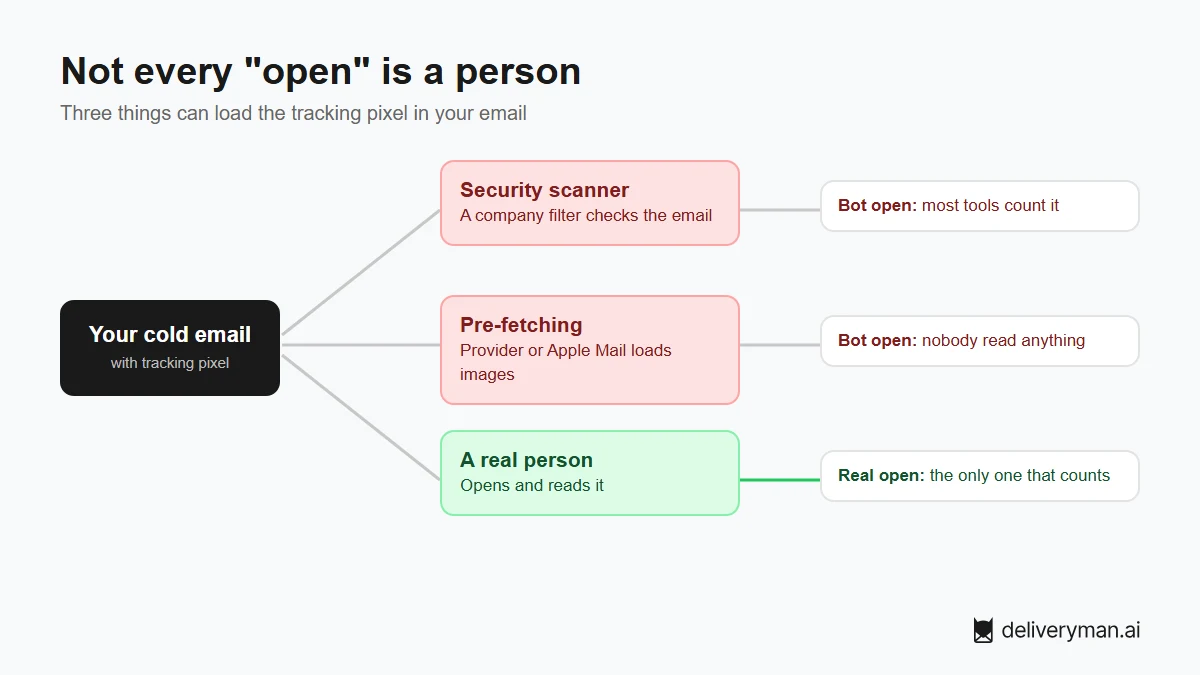
Open tracking adds a tiny invisible image (a tracking pixel) to each email. When the image loads, the tool records an open. That’s it. The tool can’t tell who or what loaded the image.
What are bot opens?
1. Security scanners
Company email filters check incoming messages for threats before anyone sees them. To do that, they often load images and follow links. B2B cold email goes to company inboxes, so this happens a lot, and often within seconds of sending.
2. Image pre-fetching
Some email providers load images in advance. Apple Mail Privacy Protection, for example, can load every image in an email whether or not the person ever opens it. To your tool, that’s an open.
3. Real people (sometimes undercounted)
It cuts the other way too. People who read with images blocked never load the pixel, so some real opens are never recorded. Open rate is wrong in both directions.
Why an inflated open rate is dangerous
- It hides deliverability problems. Scanners can load your pixel even when the email lands in spam. A high open rate can look healthy while nobody sees your emails.
- It sends you to the wrong leads. If a lead “opened 6 times,” you’d call them hot. If those were scanners, your sales team is chasing a bot.
- It breaks A/B tests. When bots make up a big part of opens, subject line tests measure the bots, not your prospects.
- It rewards the wrong copy. You end up optimizing for opens instead of replies, which are the point.
Here’s a typical example. A lead shows “Opened Email 1” one second after the email was sent, then nothing else. No person opens an email one second after it arrives. That’s a scanner. Counting it as interest puts a cold lead on your hot list.
How Deliveryman filters out bot opens
Deliveryman has bot open filtering built into every campaign, on every plan, with nothing to set up:
- Bot opens are detected automatically. Detection rules are managed by Deliveryman for each email provider.
- They don’t count as real opens. Your open rate is based on opens people actually made.
- They’re marked in the lead’s activity. A bot open shows up as “Bot Activity,” so you can see at a glance which leads were opened by a scanner and which by a person.
- You still see the total. Each campaign shows a separate Bot Opens number next to your real opens, so you know how much of the noise was filtered out.
The result: leads that look interested really are, and your team doesn’t waste follow-ups on leads that only a bot ever opened. Learn more about open and click tracking with bot filtering.
What to track instead of open rate
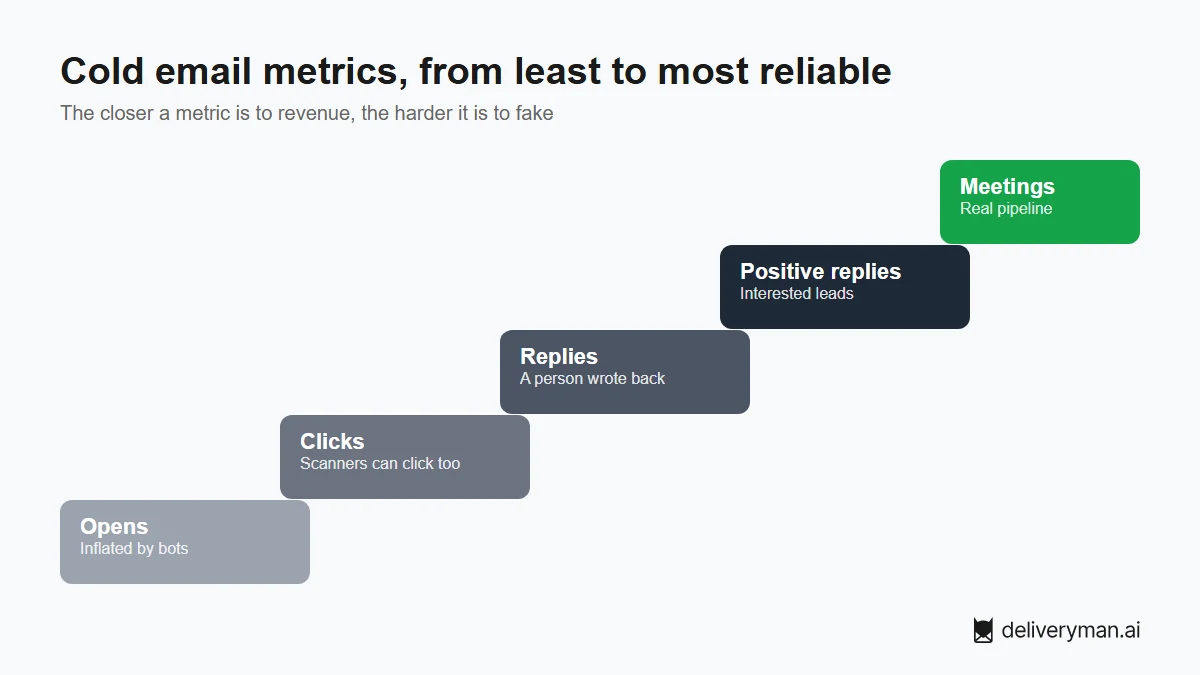
| Metric | How reliable | Use it for |
|---|---|---|
| Opens (raw) | Low: inflated by bots | Not much |
| Opens (bots filtered) | Medium | Rough signal on subject lines |
| Clicks | Medium: scanners can click too | Interest in a specific link |
| Reply rate | High | Your main campaign metric |
| Positive reply rate | Very high | Copy and targeting quality |
| Meetings booked | Very high | Real business results |
Make reply rate your headline number and positive reply rate your quality check. Use filtered opens as a supporting signal, never as proof of interest.
Should you turn off open tracking?
Some senders do. Plain-text emails without a tracking pixel look more personal and remove one more thing filters can flag. If you keep tracking on, make sure your tool filters bot opens, and judge campaigns by replies, not opens.
FAQ
What is a good cold email open rate?
It’s hard to say, because raw open rates are inflated by bots. Focus on reply rate instead. A healthy cold campaign usually gets a few percent replies or more, and strong ones go much higher.
Why is my cold email open rate so high?
Usually bot opens. Security scanners and image pre-fetching load the tracking pixel automatically, so many opens are never made by a person.
Does Apple Mail Privacy Protection affect cold email open rates?
Yes. It can load images in emails whether or not the person opens them, which records opens that never happened.
How do I tell bot opens from real opens?
Bot opens often happen seconds after sending, come in bursts or come with no other activity. Doing that by hand doesn’t scale. A tool with built-in bot filtering, like Deliveryman, marks them for you.
Next in the series: Cold Email Myth #9: Gmail and Outlook Treat You the Same.
Stop chasing bots. Deliveryman filters bot opens out of every campaign, sets up 15 warmed-up mailboxes per domain with SPF, DKIM and DMARC, and verifies your list before you send. See pricing.