
Most “best cold email software” lists compare features: sequences, AI writers, integrations, LinkedIn steps. Those matter, but they are not what decides whether a campaign gets replies. Every cold email has to clear three gates first: it has to be delivered, it has to land in the inbox, and it has to be seen. We showed in this case study that most “copy problems” are really “nobody saw the email” problems.
So this list ranks tools on the things that decide inbox placement: where the mailboxes come from, how warmup works, whether list verification and blacklist monitoring are built in, and what the full stack really costs once you add the extras.
Disclosure: we build Deliveryman, and it is #1 on this list. We have tried to be fair about where each tool is stronger, including where others beat us. Prices were checked in November 2026 from public pricing pages and pricing round-ups. They change often, so confirm on each vendor’s site before you buy.
The short list
- Deliveryman: best if you want the infrastructure, warmup, verification and sending handled for you, without buying Google Workspace or Microsoft 365 seats.
- Instantly: best all-in-one sender with a built-in lead database.
- Smartlead: best for agencies that want unlimited mailboxes and white-label client workspaces.
- lemlist: best for multichannel sequences (email plus LinkedIn and calls).
- Saleshandy: best value for high email volume on a budget.
- Apollo.io: best when you need data and sequencing in one seat.
- Woodpecker: best simple option for small, careful senders.
Comparison table
| Tool | Starting price | Mailboxes | Warmup | List verification | Blacklist monitoring |
|---|---|---|---|---|---|
| Deliveryman | $49/mo (6,000 emails) | Created for you from your domain | Unlimited, included | Unlimited, included | 100+ lists, daily |
| Instantly | $47/mo (5,000 emails) | Bring your own, or buy add-on | Included | Credit-based | Not a core feature |
| Smartlead | $39/mo (6,000 emails) | Bring your own (unlimited) | Included (tiered pools) | Add-on on lower plans | Not a core feature |
| lemlist | $69/user/mo | Bring your own (3 per user) | lemwarm included | Limited monthly quota | Not a core feature |
| Saleshandy | $41/mo (6,000 emails) | Bring your own (unlimited) | Unlimited, included | Credit-based | Not a core feature |
| Apollo.io | $49/user/mo (annual) | Connect your own | Basic | Uses data credits | No |
| Woodpecker | $29/mo (6,000 emails) | Bring your own | Limited by plan | Add-on | No |
How we ranked them
- Infrastructure: does the tool give you sending mailboxes and set up SPF, DKIM and DMARC, or do you have to buy and configure them yourself?
- Warmup: is it included, and is it unlimited?
- List hygiene: is verification built in, or is every check a paid credit? Bounces are one of the fastest ways to burn a domain.
- Monitoring: will you find out when a domain lands on a blacklist, or only when replies stop?
- Honest reporting: does the tool separate real opens from bot and security-scanner opens?
- Total cost: the plan price plus mailboxes, warmup, verification and data you have to buy elsewhere.
1. Deliveryman: best for done-for-you infrastructure and deliverability
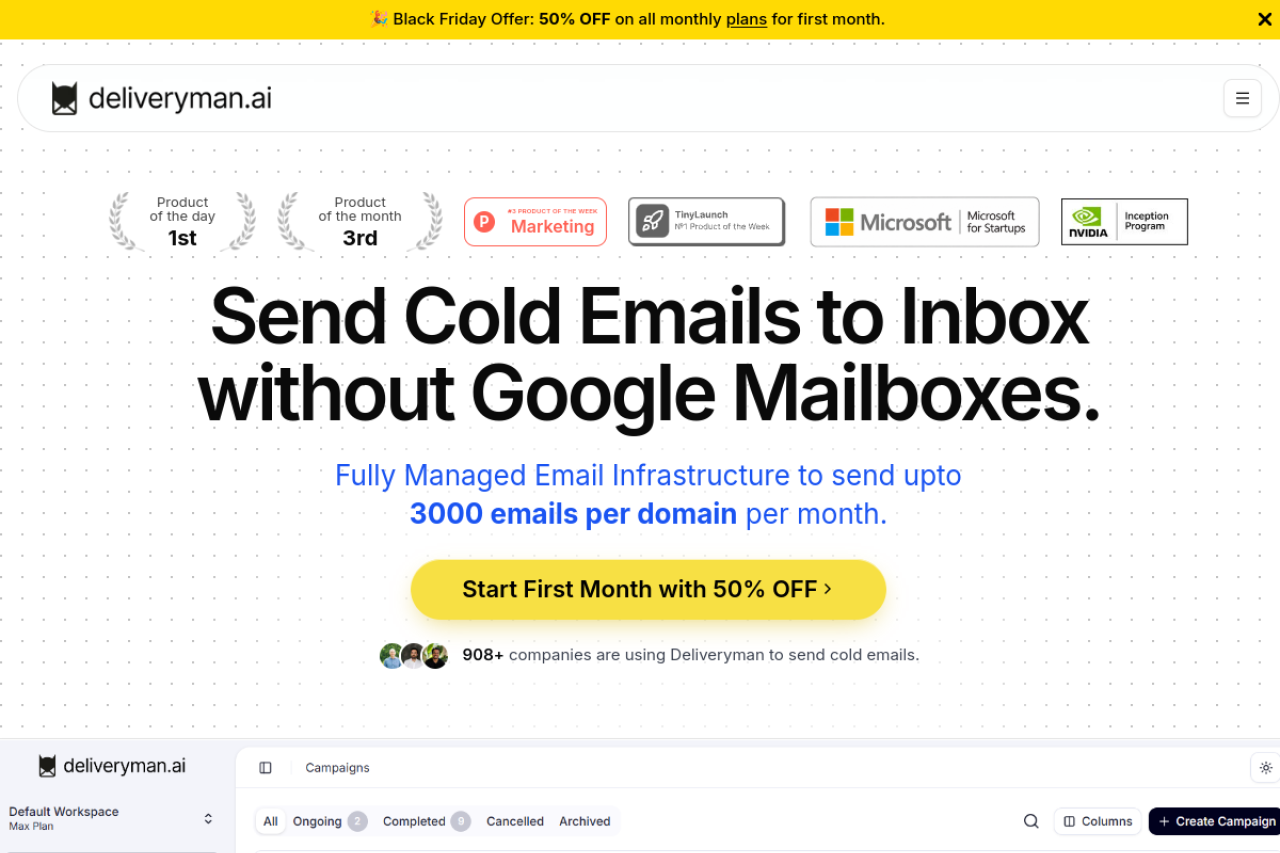
Pricing: Starter $49/mo (6,000 emails, 2 domains), Growth $89/mo (30,000 emails, 10 domains), Scale $179/mo (75,000 emails, 25 domains), Max $599/mo (300,000 emails, 100 domains). See pricing.
Most cold email tools are senders: you bring the mailboxes, the domains and the DNS setup, and they send. Deliveryman starts one step earlier. You connect one domain, and it creates three subdomains with five mailboxes each, sets up SPF, DKIM and DMARC, warms every mailbox up, then rotates your campaign across all 15. There are no Google Workspace or Microsoft 365 seats to pay for.
The rest of the plan is built around protecting that infrastructure:
- Unlimited email verification on every plan, with no credits, so there is no reason to skip it.
- Blacklist monitoring against 100+ lists, every day.
- Trusted opens that filter out bot and Apple privacy opens. Here’s why raw open rates mislead you.
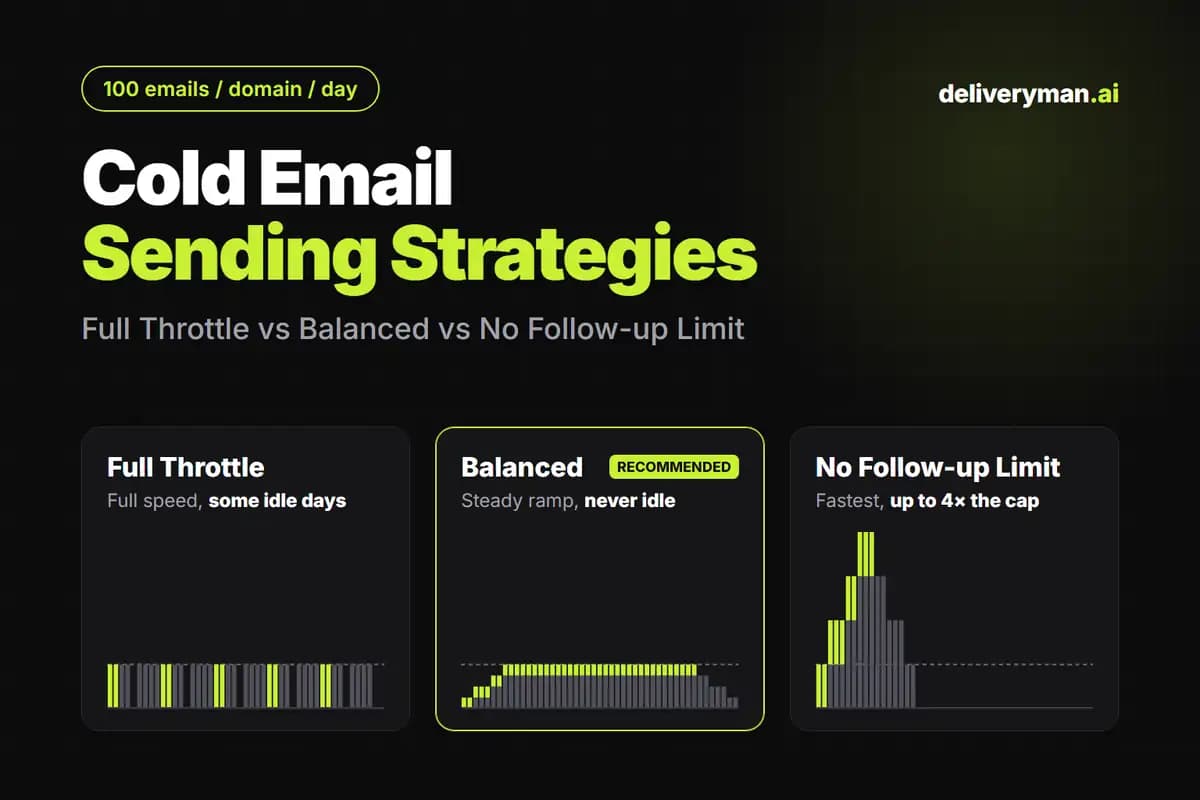
- Automatic safety limits: 100 emails per domain per day, and campaigns pause if bounces climb too high.
- A master inbox that sorts replies by sentiment, plus sequences and A/Z tests with up to 26 variants.
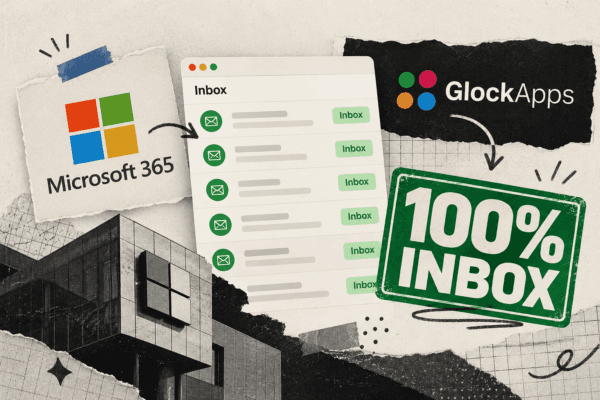
Proof: in a GlockApps seed test, every Microsoft 365 seed landed in the inbox. One customer reached a 46.12% reply rate across 1,226 publishers from two domains. Another got 92 replies from 409 leads on a single domain.
Where it falls short: there is no built-in lead database and no LinkedIn steps, so you will pair it with a data tool (see our lead generation tools list). The 100-emails-per-domain cap is deliberate, but it means you scale by adding domains rather than pushing one domain harder.
Best for: founders and teams who want cold email to work without becoming deliverability experts, and agencies that want each client on separate, monitored infrastructure.
2. Instantly: best all-in-one sender with lead data
Pricing: Growth $47/mo (5,000 emails, 1,000 contacts), Hypergrowth $97/mo (125,000 emails, 25,000 contacts), Light Speed $358/mo. Lead data runs on a separate credit system.
Instantly is the best-known name in the category. Every plan lets you connect unlimited email accounts with warmup included, and its B2B lead database means you can find prospects and send from one place. The interface is easy to learn, and it has a large community and plenty of tutorials.
Where it falls short: you still have to source and configure the mailboxes yourself, or buy them as an add-on. Verification and leads are paid by the credit, which adds up at volume. Like most senders, it relies on a shared warmup network, and its open data includes machine opens that it does not fully filter out.
Best for: teams that want prospecting and sending in one tool and are comfortable managing their own mailboxes. Comparing it with Deliveryman? See our guide to buying cold email inboxes first.
3. Smartlead: best for agencies

Pricing: Base $39/mo (6,000 emails, 2,000 active leads), Pro $94/mo (90,000 emails), Unlimited Smart $174/mo, Unlimited Prime $379/mo. Client workspaces ($29/mo each) and private servers ($39/mo each) are add-ons below the top plan.
Smartlead is built for agencies running many clients. Unlimited mailboxes, inbox rotation, a unified inbox, API and webhooks on Pro, and white-label client workspaces make it a strong fit when you are managing dozens of sending accounts.
Where it falls short: warmup quality is tiered by plan, so the cheaper plans use lower-tier pools. Mailboxes, verification on lower plans and per-client extras are paid separately, which pushes real cost well above the headline price. Setup takes more effort than simpler tools.
Best for: lead gen agencies with the technical skills to run their own infrastructure.
4. lemlist: best for multichannel outreach
Pricing: Email Pro $69/user/mo (3 sending mailboxes per user), Multichannel Expert $99/user/mo (5 mailboxes, LinkedIn and calls), Enterprise custom.
lemlist is the strongest choice if your sequences mix email, LinkedIn and calls. Personalized images and landing pages, lemwarm warmup on every paid plan, and a polished editor make it popular with SDR teams.
Where it falls short: per-seat pricing with a low mailbox limit per user makes high-volume email expensive. Verification is capped at a few hundred checks a month.
Best for: sales teams running personalized, multichannel sequences at moderate volume.
5. Saleshandy: best value for volume
Pricing: Starter $41/mo (6,000 emails, 2,000 prospects), Pro $99/mo (100,000 emails, 30,000 prospects), Scale $189/mo (200,000 emails).
Saleshandy offers unlimited email accounts and unlimited warmup on every plan, with generous email volumes for the price. It also sells domains and mailboxes as an option, so you can get most of the stack from one vendor.
Where it falls short: verification and lead data run on credits, and deliverability monitoring is lighter than a dedicated tool.
Best for: budget-conscious teams sending at high volume.
6. Apollo.io: best for data plus sequencing
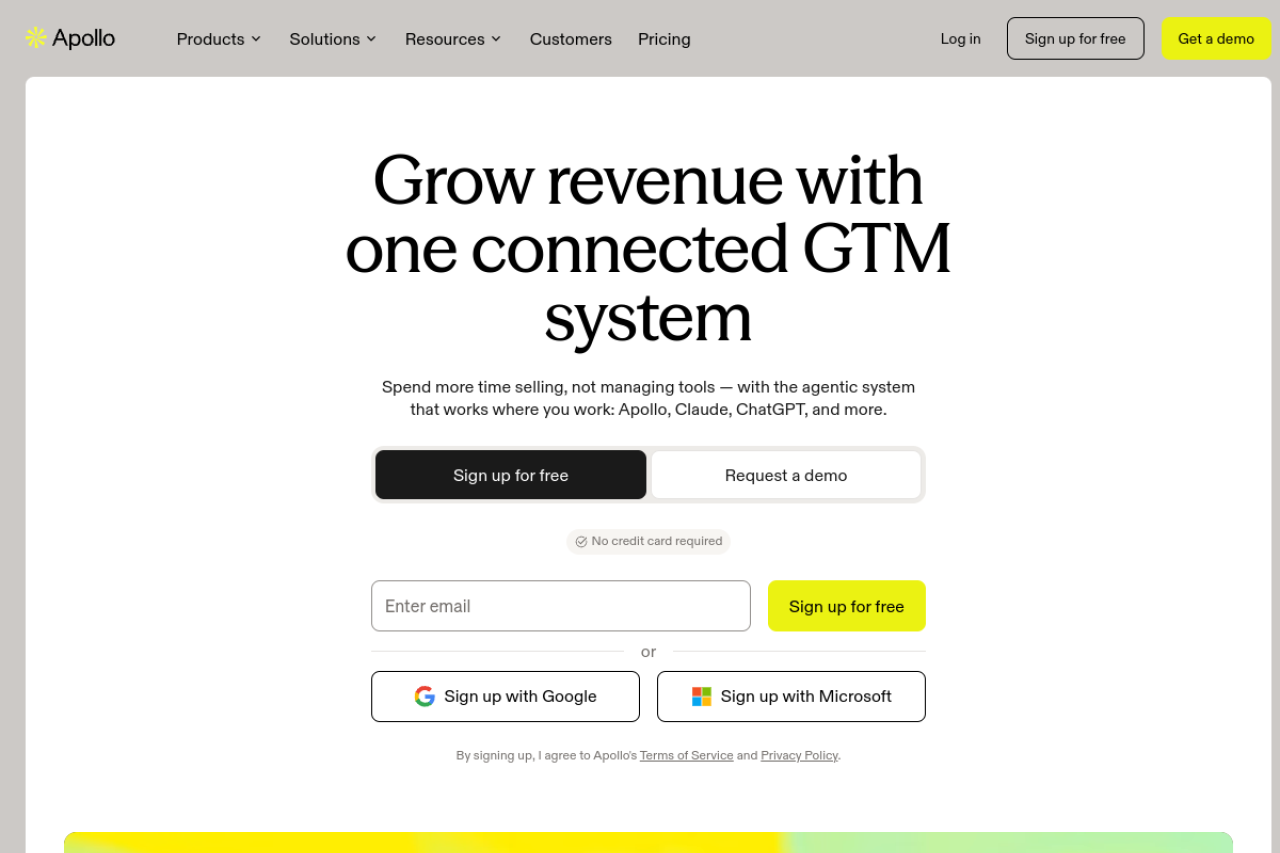
Pricing: free plan available. Basic $49/user/mo and Professional $79/user/mo on annual billing (higher monthly).
Apollo is a contact database first and a sending tool second. Its strength is finding and enriching prospects, with sequencing built on top so a small team can do everything from one seat.
Where it falls short: it is not built for high-volume cold sending across many mailboxes, and it has little in the way of deliverability tooling. Many teams use Apollo for data and a dedicated sender for delivery.
Best for: small sales teams that want prospecting and light sequencing in one place.
7. Woodpecker: best for small, careful senders
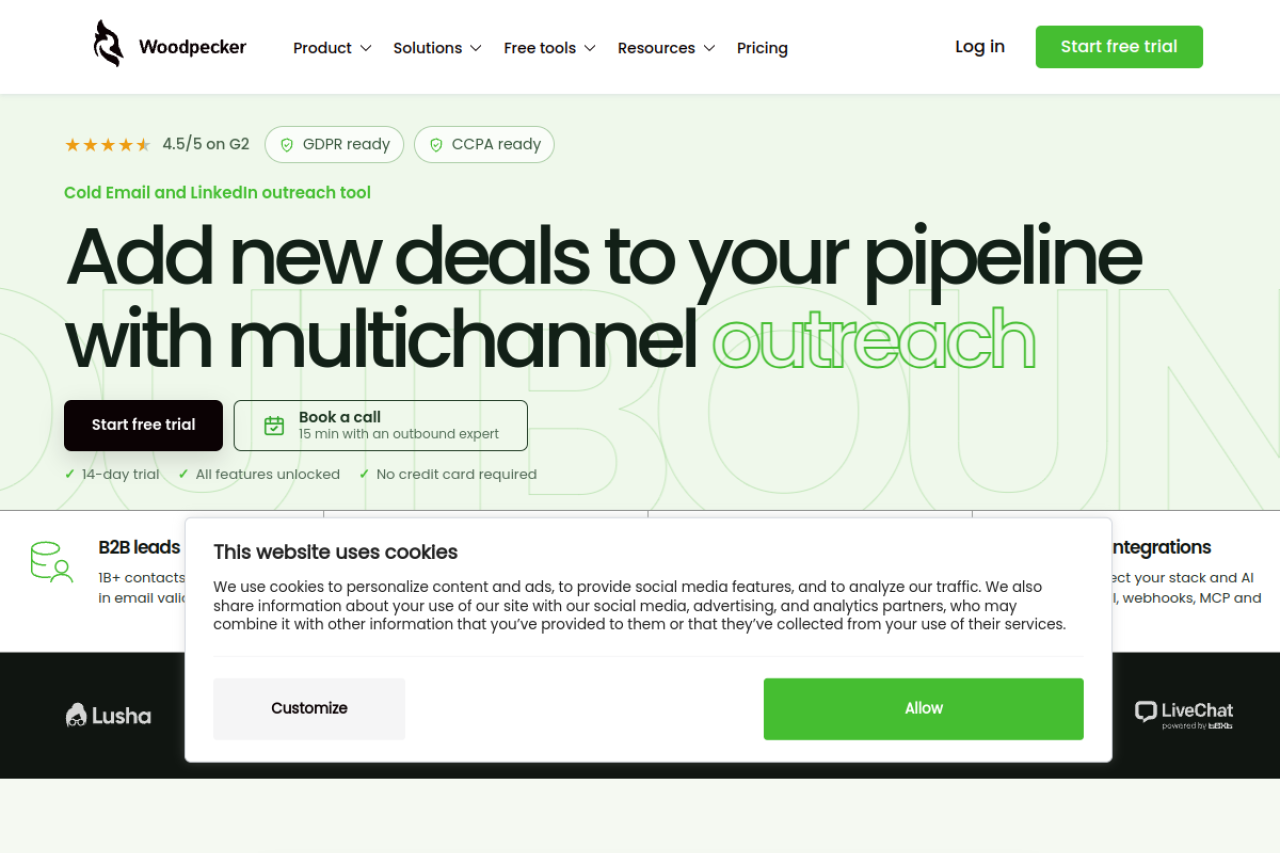
Pricing: Starter $29/mo (500 prospects, 6,000 emails), Growth $84/mo (3,000 prospects), Scale $188/mo (10,000 prospects).
Woodpecker has been around for years and focuses on safe, steady sending with a clean interface. The entry price is low and the 7-day trial needs no card.
Where it falls short: prospect limits are tight for the price, the number of warmups is capped by plan, and the API costs extra.
Best for: consultants and small teams sending a few hundred personalized emails a month.
The hidden cost most comparisons leave out
A sending tool’s price is rarely what you end up paying. With most senders you also need:
- Mailboxes: Google Workspace or Microsoft 365 seats, or pre-warmed inboxes, usually a few dollars per mailbox per month.
- Domains: several secondary domains so your main domain stays safe.
- Verification: credits for every address you check.
- Monitoring: a separate tool to tell you when a domain gets blacklisted.
Add 15 mailboxes, verification for a few thousand leads and a monitoring tool to a $40–$100 plan, and the real cost often doubles or triples. Run that math before you compare headline prices.
How to choose
- You don’t want to manage mailboxes, DNS or warmup: Deliveryman.
- You want leads and sending in one place: Instantly or Apollo.
- You run an agency with many clients: Smartlead, or Deliveryman with one workspace per client.
- Your sequences include LinkedIn and calls: lemlist.
- You need the most emails for the least money: Saleshandy.
- You send small volumes and want simple: Woodpecker.
Whichever you pick, the same rules decide whether it works: verify every list, warm up new domains, keep volume per domain low, and watch bounces and blacklists. Our sending strategy guide covers how to pace campaigns, and our verification status guide explains which addresses to skip.
FAQ
What is the best cold email software in 2026?
It depends on what you want to manage. If you want mailboxes, warmup, verification and monitoring handled for you, Deliveryman. If you want a lead database inside your sender, Instantly. For agencies, Smartlead. For multichannel, lemlist.
Do I need Google Workspace to send cold email?
No. Most senders expect you to connect Google or Microsoft mailboxes, but infrastructure platforms like Deliveryman create the mailboxes on your own domain, so you do not pay for Workspace or Microsoft 365 seats.
How many cold emails can I send per day?
Keep it low per domain. Deliveryman caps sending at 100 emails per domain per day, spread across that domain’s mailboxes, and you scale by adding domains instead of pushing one harder.
Is cold email still worth it?
Yes, when the setup is right. Lazy, high-volume cold email has stopped working; targeted outreach from healthy infrastructure still gets replies. We covered this in Cold Email Myth #1: “Cold Email Is Dead”.
Deliveryman turns one domain into 15 warmed-up mailboxes, with unlimited verification, daily blacklist monitoring and automatic rotation, no Google Workspace needed. Start your first campaign.